A Close Look at Our Collections Journey
We are very excited to announce that our collections improvement journey, as a part of our larger mission towards accreditation, is going incredibly well! As of this post, we have now processed over 1,100 objects! Crossing these huge milestones would not be possible were it not for the passion and dedication of the volunteers and staff involved in each step of the journey. Last post, we introduced you to the first step of our collections process, the Treasure Hunt, the beginning stage, which locates objects so they can begin their journey through our cataloguing system. The next step is Acquisition Creation. This step is the first time that an object is entered into the online side of our collections. One of the most important aims of The Wee Museum of Memory and our collections improvement journey is ensuring that our collections are as accessible to the public as possible. As a part of these accessibility efforts, we are uploading each and every object online so that people all around the world can view and learn from the objects in our collection.
The majority of the objects in The Wee Museum of Memory’s collections are acquired through donations from members of the community. Acquisition Creation involves creating an online record for these donations so we can keep track of donors and which objects were donated together. Another important part of Acquisition Creation is ensuring that an object has been quarantined correctly. Each new object needs to be quarantined away from the rest of our collection for at least 72 hours, and up to 6 months for fabric items. We quarantine our items to make sure that they do not have anything on or in them, like mold or pests, that could jeopardise the rest of our collection. During Acquisition Creation, we check that quarantine has been correctly passed, the donation is recorded online, and the object continues along its collections journey.

Want to take a look at the 1,100+ objects now in our online collections?
The museum staff and volunteers have worked hard to ensure that the public has online access to each and every object that passes through our collections journey. If you would like to browse through these objects, click below!
Making Light
Two objects, held in our collections, making light of a very serious and very scary time in British history, reveal the resiliency of the human spirit in the face of adversity. After all, humour is one of the best medicines.
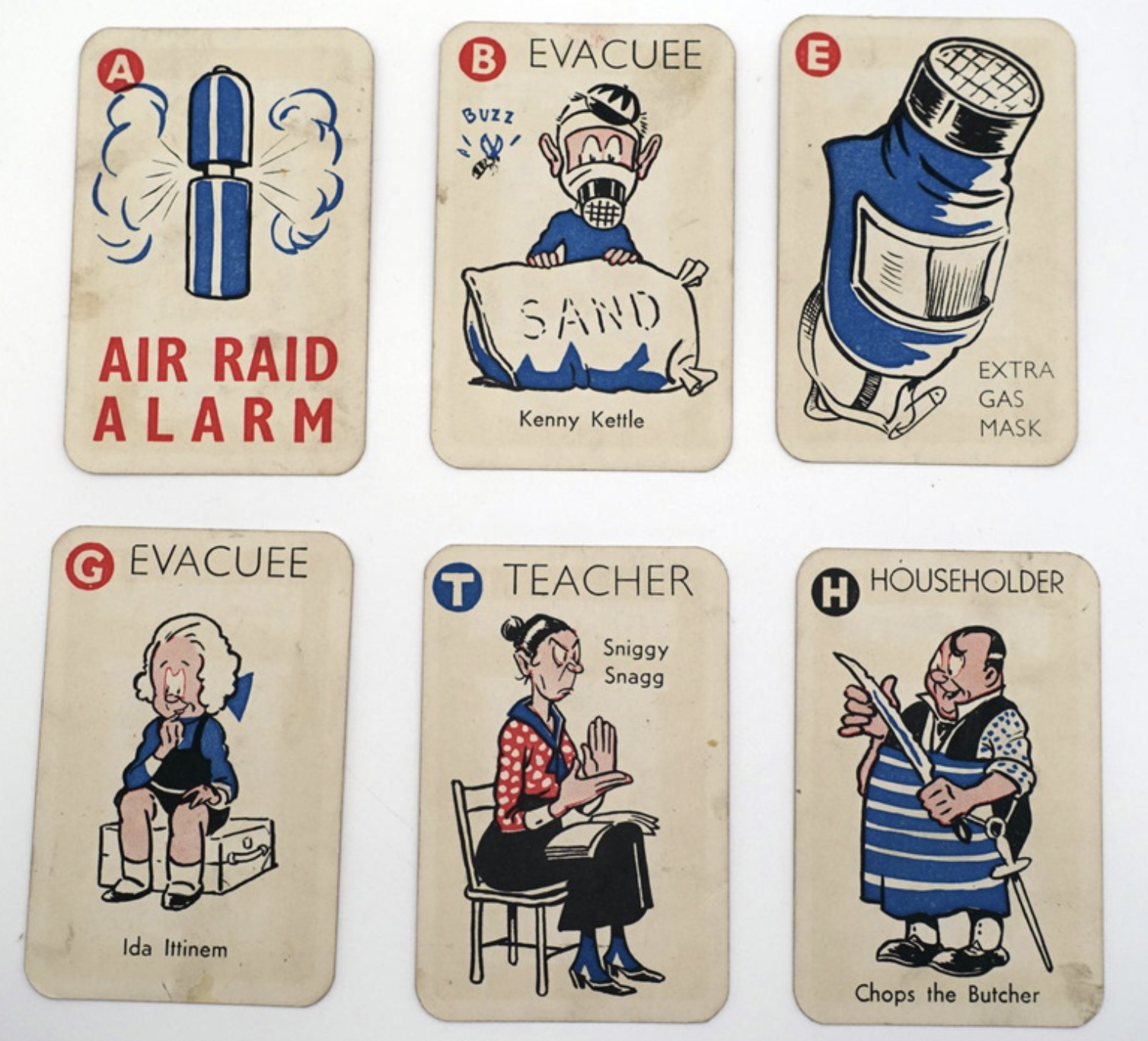
Two sets of WWII-era playing cards travelling through our collections processing system at The Wee Museum of Memory recently piqued the interest of our collections volunteers. Both of these sets were created during the first year of the Second World War, 1939. The first set is called “Vacuation” and is a game that centers around the city evacuations, which were the targets of air raids, to the safer countryside. The cards feature caricaturised images of children, the Evacuees, along with catchy names for each of them like Ida Ittinem, Hilda Howler, and Katie Kettle. Some of the children are shown with luggage, wearing gas masks, or crying, situations that were realities of those living through the evacuations. Other cards have caricatures of Teachers in the city, Householders in the country, and a single Air Raid Alarm card.
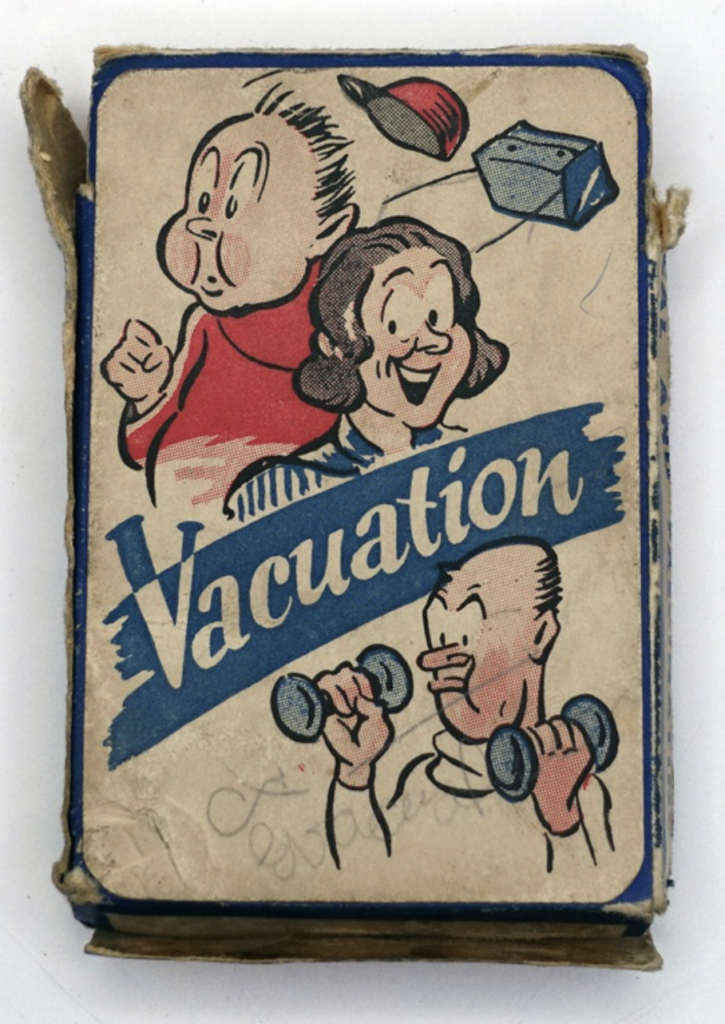
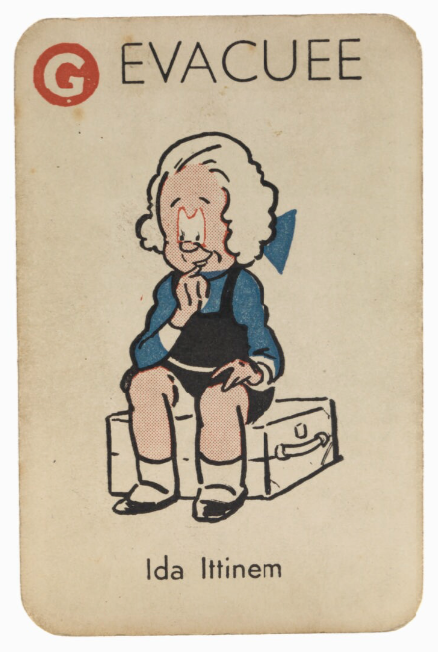
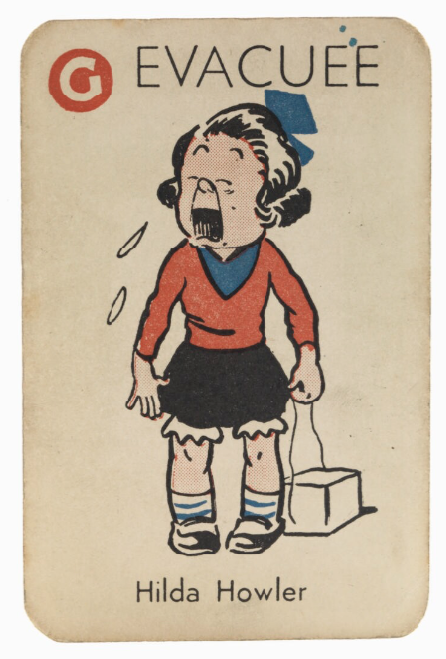
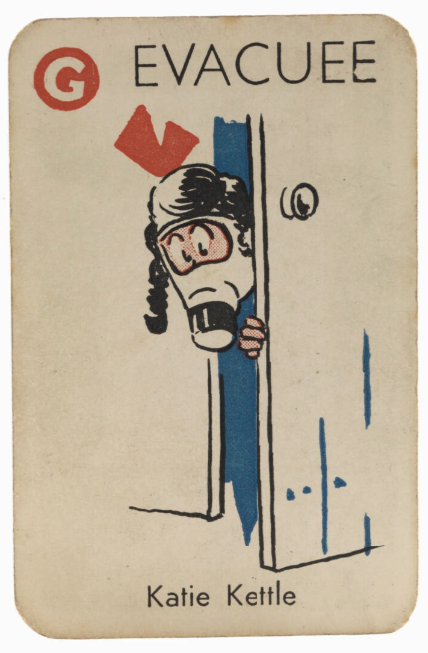
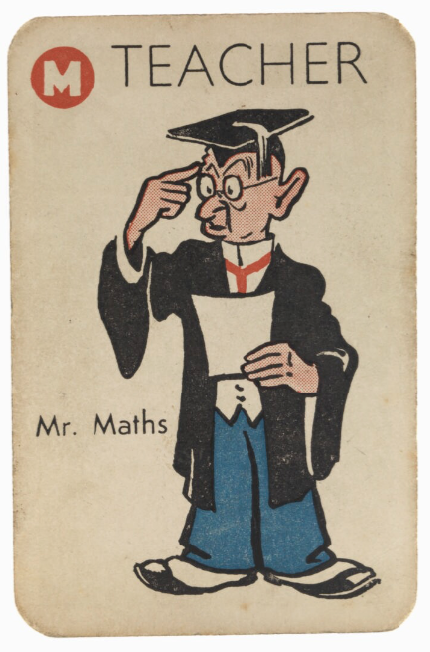
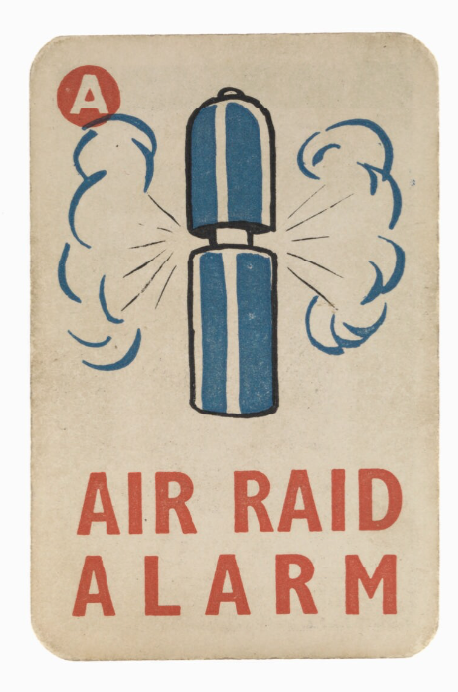

Despite the seriousness of the evacuations, conducted to escape the air raid bombings happening in British cities, the target market of this humorous card game was the very people living through them. The parents and children playing this game were the ones actually living through the air raids, gas masks, crying children, and evacuations, and yet much of the British public purchased and played these games, making light of the dangerous situation they were living through to better face it.
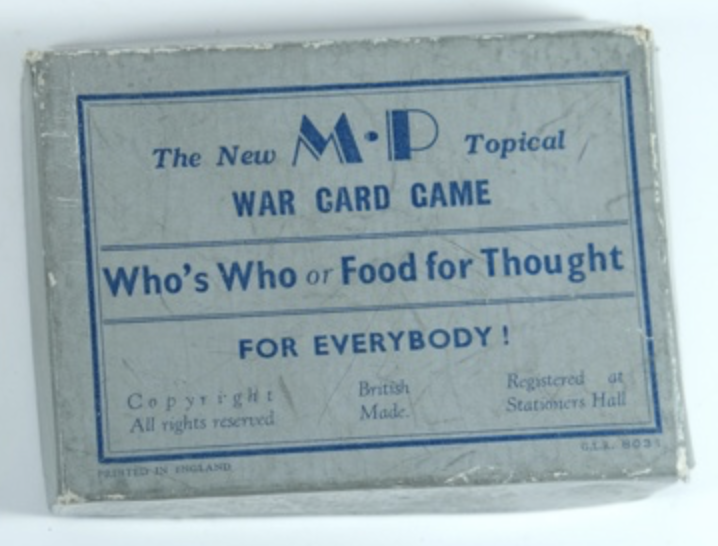
The other set held in our collection, “Who’s Who or Food for Thought,” is a play on words game which involves matching wartime figures from Winston Churchhill to Adolf Hitler, with rhymes and icons. Players must complete matching sets of three cards for example:
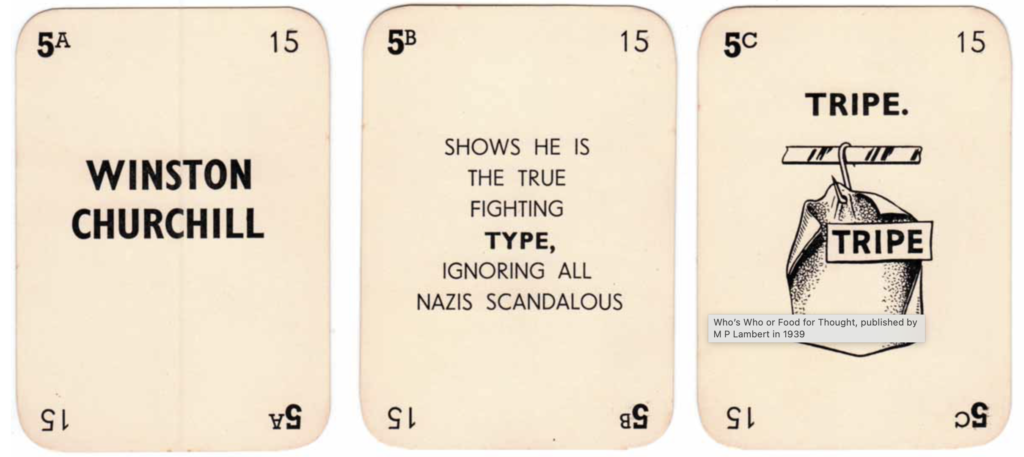
or
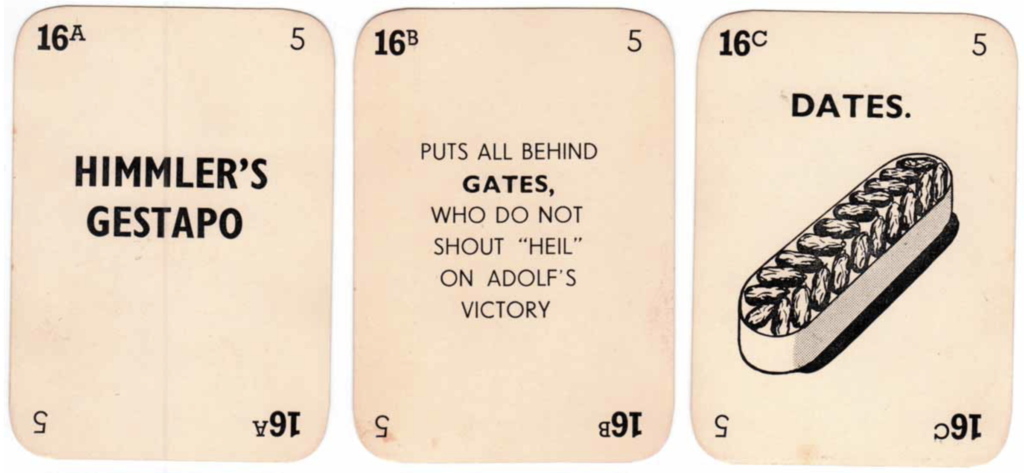
This game, just like “Vacuation” makes light of the serious topics faced by those living through WWII, putting a humorous tint over even subjects like Adolf Hitler and the Nazis. Clearly, the British public found some solace and potentially some measure of control by flipping the script and making light of these scary times. In fact, even British authorities, like Winston Churchill recognized the importance of making light through card games during trying times.
These packs of wartime cards have a more complicated history than most people might initially suspect. During WWII, paper was a hot commodity. From the onset of the war, paper was in short supply, just like many other materials and products in the UK. Because of this, cards were initially seen as a frivolous waste of paper. That was until 1943, when Winston Churchill himself wrote a memo to the Board of Trade explaining that there was a shortage of playing cards among soldiers and that they were, in fact, essential for keeping morale up.
“I am told that in spite of contributions from civilian supplies there is at present a shortage of playing cards for use by the forces and workers in industry. The importance of providing amusement for the forces in their leisure hours and in long periods of waiting and monotony in out of the way places, and for sailors penned up for months in their ships for months together, cannot be overstated. Nothing is more handy, more portable, or more capable of prolonged usage than a pack of cards.“ – Winston Churchill
Less than a week later, Winston wrote to the Board of Trade again, elaborating on his first memo.
“The important thing is to have cards freely forthcoming when called for, and although the soldiers should have priority civilian workers need them too.” – Winston Churchill
Churchill believed that card games were important for the morale and mental well-being of not just soldiers, but civilians who were also facing hardships at home. The card games in our collections portray the resilient spirit of those living through WWII and how they used humour to make light of their terrifying situation and cope with the hardships of the time.
Want to explore our collections in person?
Our museum is open to the public 7 days a week! Many of our objects are part of our handling collections, which means you are welcome to touch and explore many of our objects, and an innovative approach meant to encourage community involvement with our collections and museum. If you want to learn more about our museum or see information like opening times, click the link below!