Take Another Close Look at Our Collections Journey
It’s time for another update! As always, our collection of cataloged items has continued to grow. Our volunteers and museum staff have been working tirelessly throughout the chilly autumn month of October to keep the momentum of this journey going and have now successfully processed 1,650 objects. We’re feeling really good about our progress at this point; a significant dent has been made in the backlog of objects in our collection. Real progress has been made in our goal of becoming accredited as well. We had an informal meeting with Museum Galleries Scotland early this month and gained some really important insight into our accreditation journey. And I’m happy to report that we are on the right track and speeding towards that achievement. Following that meeting, we have decided to focus a little more on our accessioned items. Accessioned objects are those that a museum has agreed to be legally responsible for.
This means that the museum must justify why we are taking responsibility for them, protect them for future enjoyment, and also conduct in-depth research about them. The Wee Museum of Memory currently has 20 accessioned objects, and we’ve decided to put together a small team to focus on further developing those 20 objects. This team recently had its first meeting, where we decided on a development plan for our accessioned objects. The development will involve a clean up for the accessioned objects records, designed to ensure they are consistent, accurate, and compliant with the standards for accreditation. It will also focus on researching all that we can about the history and provenance of the objects and then transforming that research into exhibitions for the museum, podcasts, videos, and other avenues for sharing the objects with the public!

Want to take a look at the accessioned objects in our collection?
The 20 accessioned objects, as well as the other 1,630 objects that we’ve catalogued so far, are available to view completely free on our online collections system. Click the link below to see them! It’s also free to come into our museum if you want to see some of our objects in person. You’ll find us at Ocean Terminal in Leith, open 7 days a week!
An Empty Tea Tin Full of History
An Empty Melrose’s Tin and the Domestic and Global History of Tea in Scotland
For this blog edition, the object deep dive was researched and written by Edie Christian, one of the dedicated volunteers at the Wee Museum of Memory!
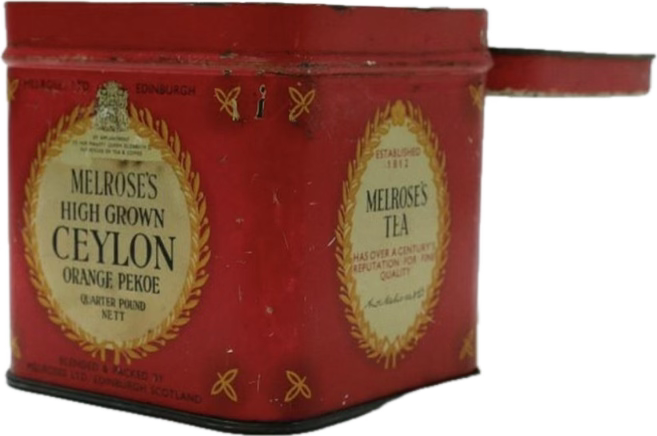
Some of the most unassuming objects in our museum collections are the empty tins and containers, often donated to us after being kept at the bottom of dusty cupboards for decades. At first, this appears to be true of this empty tin of Melrose’s Ceylon Orange Pekoe Tea; however, when investigated further, this tin shows how tea drinking became central to Scottish daily life. Objects like this can also tell us about Scotland’s place in the wider world. Melrose not only became a household name – particularly in Edinburgh – but it also became a symbol for the end of the East India Company’s monopoly on the tea trade. Asking questions about this supposedly empty tin uncovers a centuries-old picture of how ordinary aspects of Scottish daily life were intertwined with its global impact.
Where did tea come from, and who brought it to Scotland?
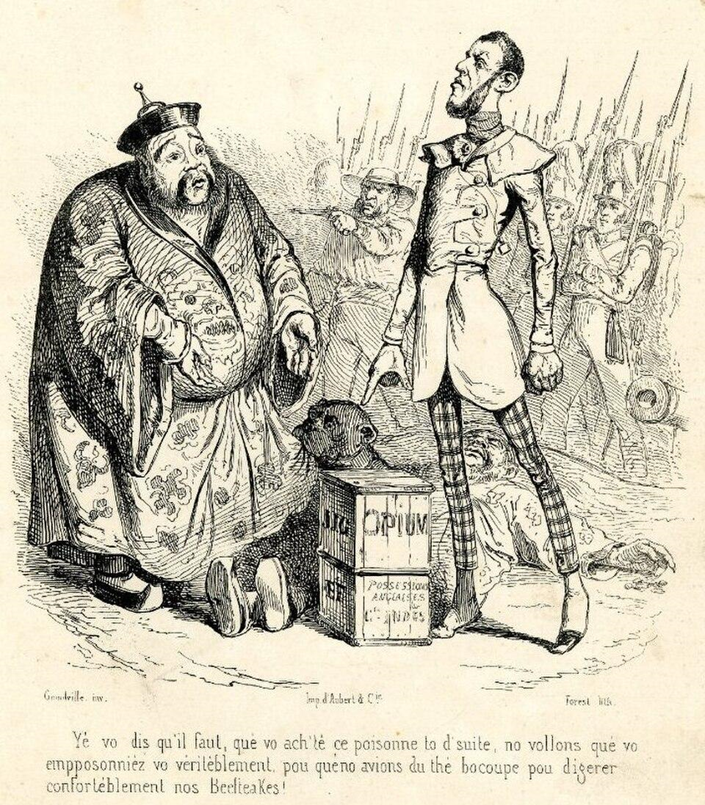
Tea was first introduced to Scotland in the early 1600s by the Duchess of York – she brought it over from Amsterdam, and it became increasingly fashionable throughout the 1700s. China was the only exporter of tea at the time, and because it was central to the Chinese economy, its secret process was closely guarded. The Chinese monopoly over tea meant importing tea into Britain became increasingly difficult for the East India Company, Britain’s largest trading company. The East India Company’s solution was to smuggle opium into China, which caused mass opium addiction among the Chinese people. This led to the Opium Wars, fought during the 18th century between Britain and China, which forced China to accept free trade and British control over key territories such as Hong Kong.
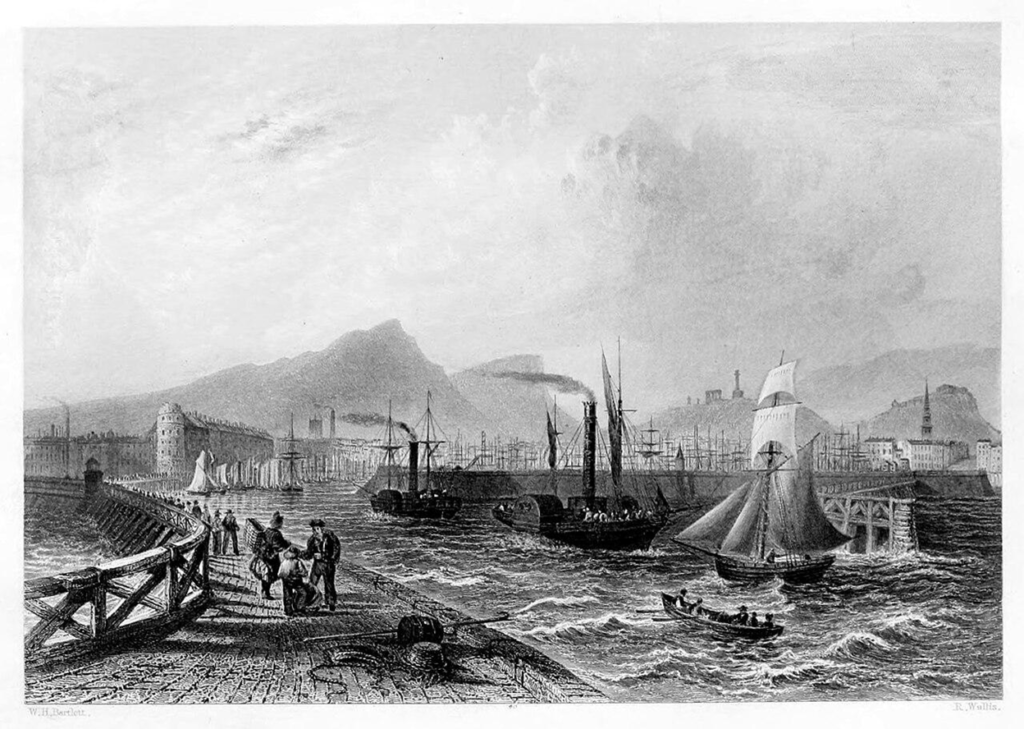
Although China lost both of the Opium Wars, the East India Company wanted a more permanent solution to meet the ever-increasing demand for tea across Britain. By the late 18th century, Scots had come to dominate the military, civil service, and commercial leadership of the East India Company. By the 1790s, roughly one in three officers were of Scottish origin, and Scottish ports such as Leith became big destinations for East India Company imports of tea. Robert Fortune, a botanist from the Scottish borders, was sent to China by the company and was instructed to return with the knowledge of their tea-making processes. He used a disguise and extensive travel notes to illegally smuggle 20,000 tea plants and eight Chinese tea masters out of the country.
Many Scots also ran British-owned tea estates in India and Ceylon (now Sri Lanka). These tea estates and sugar plantations relied heavily on indentured labour and debt bondage until the 1920s. The dangerous conditions and exploitative wages of those workers have led many historians to consider it a form of slavery.
Andrew Melrose & Co., Tea Merchants
By the beginning of the 18th century, the East India Company’s tight grip on the tea trade was loosening – Andrew Melrose had begun an importing business in Edinburgh in 1812, eventually obtaining a Royal Warrant as tea purveyor to Queen Victoria. In 1816, Melrose’s weekly sales were approximately £475 (~£60,000 today). Melrose became the first independent merchant to land tea in Britain; his importation into Leith in 1835 marked the end of the East India Company monopoly. In January 1836 alone, 1000 cases of tea arrived in Leith for Melrose. A management buyout of the Melrose Tea Company in 1990 led to the formation of the Edinburgh Tea & Coffee Company, still in business today.
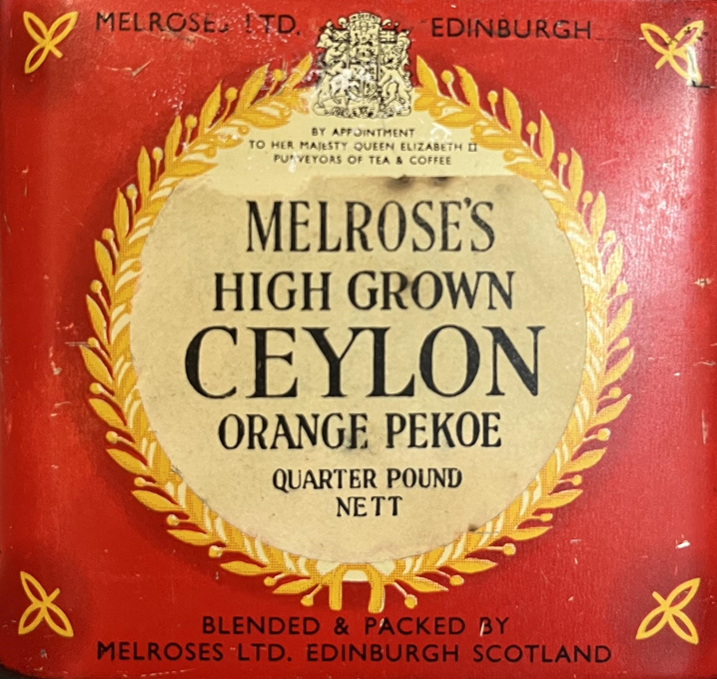
The Melrose tin in our collection is estimated to date to around the 1950s-1960s, and was donated alongside a tea shovel, embossed with ‘Centenary 1912 of Melrose’s Famous Teas’. Its packaging portrays the advertising trends of mid-century Britain, particularly how the product is marketed as premium despite the fact that it was commonplace. The royal warrant is included on the front of the tin to convey its royal prestige to the average consumer.
The tin is made of lithographed tinplate, which was a material traditionally designed for long-term domestic reuse. The durability, cost, and sturdiness of tinplate meant that containers like this one often found second lives as button boxes or sewing kits, a practice that undoubtedly persists today. It’s a universal experience to open a tinplate biscuit tin at your gran’s house, hoping for sugary treats but instead finding buttons and needles.
Who drank tea?
To better understand Scotland’s role in the global tea trade, we have to look at tea consumption at home, particularly its social role. The use of indentured labour on tea estates and the end of China’s trade monopoly meant that tea imports had become much cheaper, and tea drinking was no longer restricted to the upper classes. It became an essential part of daily life for many people, including those from the working classes. In the 1900s, more tea was consumed in the household than ever before.
Tea drinking was also developing a more social aspect. In 1875, Stuart Cranston’s introduction of tables and chairs in his Glasgow tea shop signalled the first sit-down tearoom in Scotland. His sister Catherine, known professionally as ‘Miss Cranston’, built on this development, eventually opening four tearooms in Glasgow. The growth of the temperance movement (a movement against the consumption of alcohol) meant that the tearooms were an alternative to pubs, and its growing appeal meant that they began to cater to people beyond just the rich. Miss Cranston opened her first tearoom in 1878 on Argyle Street, and her last in 1903 on Sauchiehall Street. The latter were the famous Willow Tearooms designed by Charles Rennie Mackintosh, the pioneering leader of the Glasgow Style.
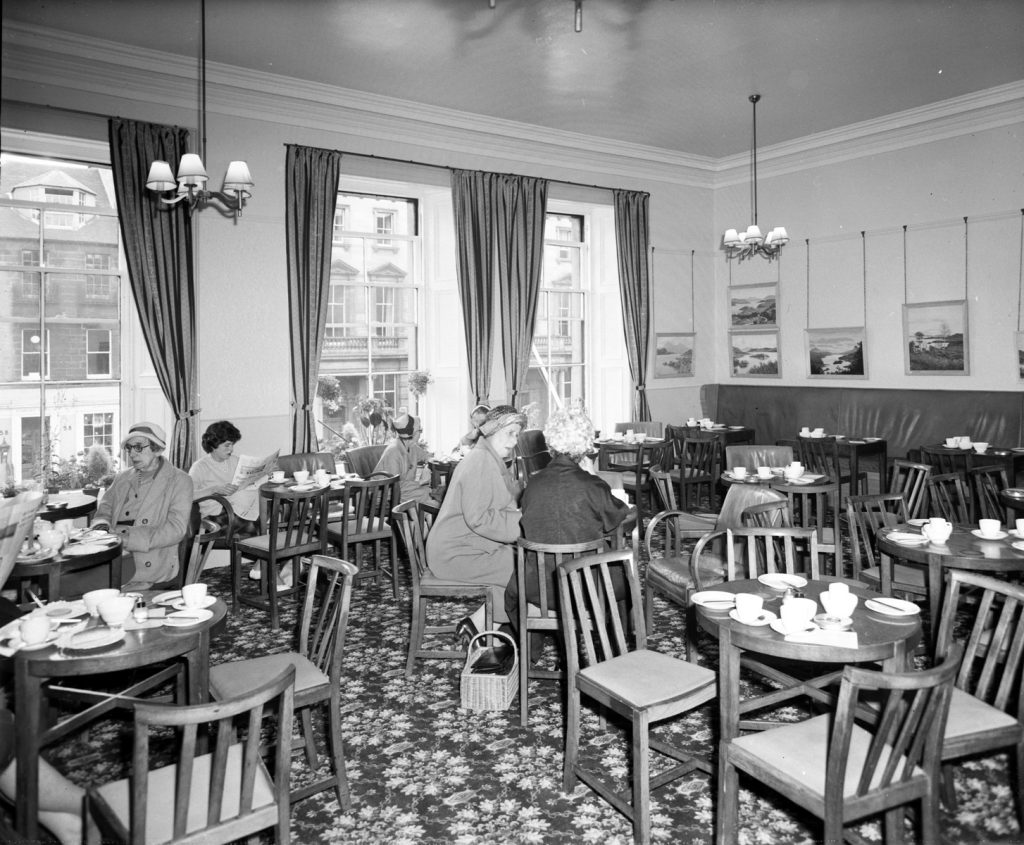
We have found that the seemingly insignificant objects in our collection are often the ones that hold the most hidden history. This empty tin is representative of the wider history of the connections between everyday Scottish life and the global tea trade. The brand name Melrose, plastered on the front of the tin, represents the defeat of the East India Company monopoly and the rise of the enjoyment of tea for the working class. However, it is also important to recognise the connection it represents between the pleasure the tea trade brought to Britain and the cruel, exploitative practice of indentured labour and the intentionally constructed mass opium addiction in China. The hidden histories and global connections of such ordinary household objects, like this Melrose tea tin, are often not obvious until you question their origins, journeys, and destinations.

Want to explore where the photo from above came from and discover others like it?
We have a photo collection of over 5,000 images online and open to the public! Click below if you’d like to take a look at the rest of the collection.
By Edie Christian and Matilda Whitelock